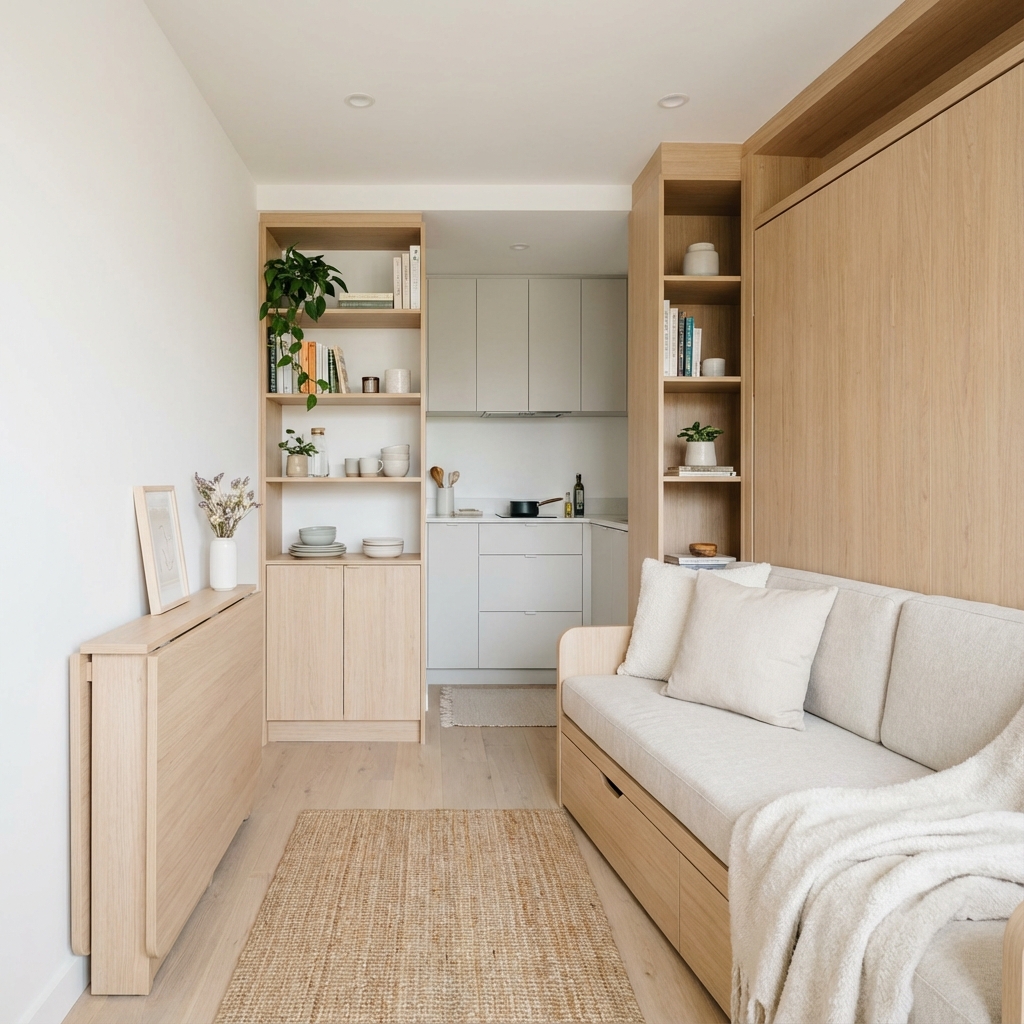
"Living in a compact space? Discover clever design strategies and space-saving solutions that make small rooms feel spacious and functional."
The Art of Small-Space Living
Limited square footage doesn't mean limited style. With strategic design choices, small spaces can feel open, organized, and beautiful.
1. Embrace Multifunctional Furniture
Every piece should earn its place. Consider:
- Storage ottomans that serve as seating and hidden storage
- Murphy beds that fold into walls
- Extendable dining tables
- Sofa beds for guest accommodations
- Nesting tables for flexible surface space
2. Use Vertical Space
When floor space is limited, look up:
- Floor-to-ceiling shelving maximizes storage
- Wall-mounted desks fold away when not needed
- Hanging planters bring greenery without taking floor space
- High-mounted curtain rods make ceilings appear taller
3. Color Psychology
Light colors expand visual space. White, soft grays, and pastels reflect light and create airiness. Add depth with an accent wall in a slightly darker shade rather than overwhelming the space with bold colors.
4. Mirror Magic
Strategically placed mirrors double visual space by reflecting light and views. Position mirrors opposite windows to maximize natural light, or create a gallery wall of varied mirror shapes for functional art.
5. Transparent & Leggy Furniture
Glass tables, acrylic chairs, and furniture with exposed legs create visual flow. When you can see through or under furniture, rooms feel less cluttered.
6. Smart Storage Solutions
Hidden storage maintains clean lines:
- Under-bed storage containers
- Built-in window seats with lift-up tops
- Over-door organizers
- Corner shelves utilize dead space
- Pegboard walls offer flexible organization
7. Scale Matters
Choose appropriately sized furniture. Oversized pieces overwhelm small rooms, but too-small furniture can make spaces feel disconnected. Aim for pieces that fit the scale of your room while providing necessary function.
8. Create Zones
Even in studios, define separate areas for different activities. Use rugs, lighting, or furniture arrangement to distinguish living, sleeping, and working zones without physical barriers.
9. Lighting Layers
Multiple light sources create depth and flexibility. Combine overhead lighting with task lamps and accent lights to make spaces feel larger and more versatile.
10. Edit Ruthlessly
The minimalist approach works best in small spaces. Display only items you love and use regularly. Store seasonal items elsewhere, and embrace the "one in, one out" rule.
Small Space Success Stories
At MA Interior Design, we've transformed countless compact apartments and homes into functional, beautiful spaces. Our portfolio includes 400-square-foot studios that feel twice their size through thoughtful design.
Real-World Application
Recently, we redesigned a 550 sq ft apartment by:
- Installing a Murphy bed with integrated desk
- Creating a custom storage wall
- Using a monochromatic color scheme
- Incorporating mirrors to reflect the view
- Adding multi-level lighting
The result? A space that functions as bedroom, home office, dining room, and entertaining area—all without feeling cramped.